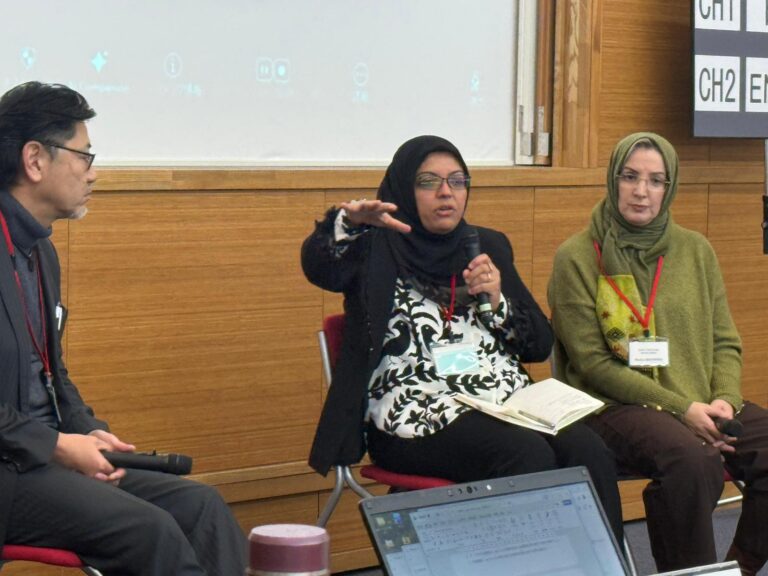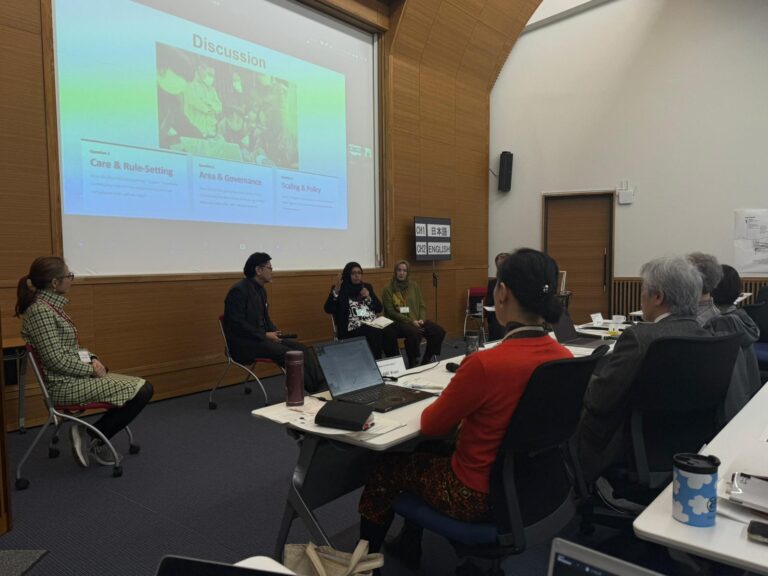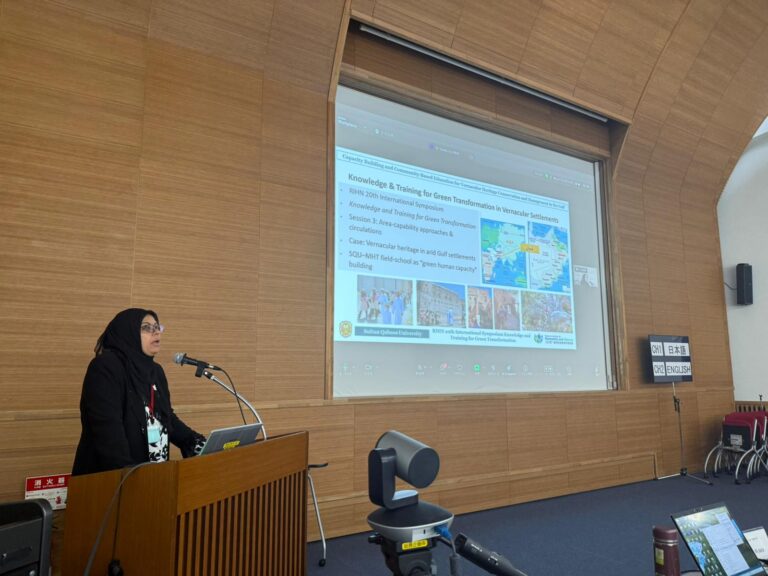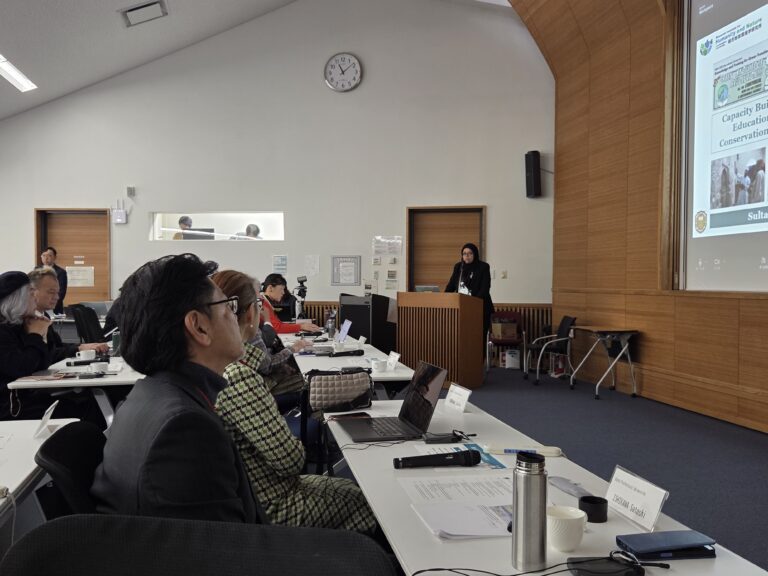
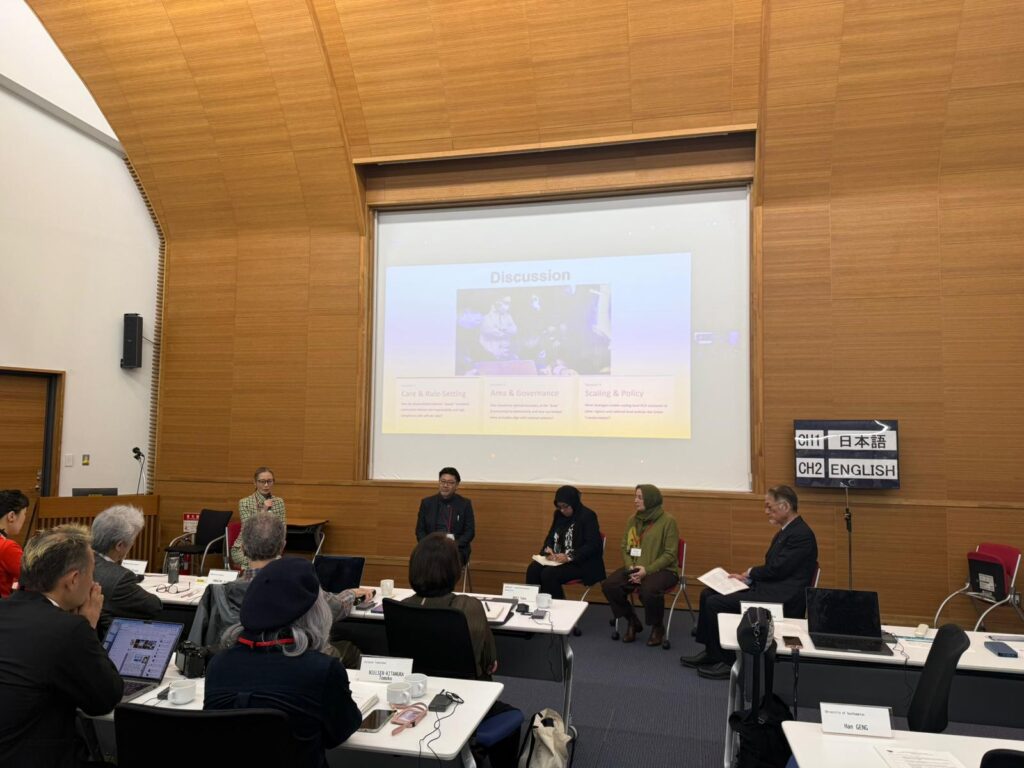
At the RIHN 20th International Symposium: “Knowledge and Training for Green Transformation,” Naima Benkari presented a contribution on capacity building and community-based education for vernacular heritage conservation and management in the Gulf, framed through an area-capability approach. This approach positions threatened vernacular settlements not only as sites at risk, but as training grounds for “green human resources”, where conservation practice, institutional collaboration, and community knowledge are developed together.
The presentation drew on a field-school model in Oman’s arid settlements, developed through cooperation between Sultan Qaboos University and the Ministry of Heritage and Tourism, where documentation and management planning became the core pedagogy. The programme combines building context sheets, measured drawings, systematic photography, and semi-structured interviews (conducted in local dialect) to ensure residents are treated as primary knowledge-holders and co-researchers, while producing decision-grade outputs that feed heritage management plans and redevelopment guidance.
Building on this analogue workflow, the work integrates 3D laser scanning, photogrammetry, drones, and HBIM as supporting infrastructure, strengthening diagnosis and future restoration without displacing the on-site, relational field-school model.